Weglot vs Linguise: lowest price across many languages, or a translation workspace?
Weglot is a website translation platform, with brand-aligned translations, glossary and multilingual SEO managed in one workspace. Linguise is proxy-based automatic translation with a front-end editor, priced on words alone with no limit on the number of languages.

- No credit card details
- No commitment
- 14-days free
The short answer
Weglot is best for teams that want multilingual SEO and GEO handled automatically, and translations that sound like your brand, all housed in one user-friendly workspace. Linguise is for those whose biggest priority is price across languages.
What is the main difference between Weglot and Linguise?
With Weglot, you get a tool that covers the entire translation process from start to finish. It detects new content, translates and displays it immediately, and the centralized interface is where you can review and modify what matters most. Edit them through the Visual Editor or through the Translation List, with brand and product terms fixed in a glossary, your own translators and teammates added to the dashboard, and the option to order professional translation.
Linguise focuses on translation delivery. It applies what it calls automatic instant neural translation through a proxy, with a choice between Google Cloud AI translation and its own Linguise AI Translation built on a translation LLM, and gives you a front-end Live Editor to correct translations on the page, along with translator accounts and optional manual review.
So both automate the translation and both let you correct it on the page. Weglot offers you more management options and charges by number of languages. Linguise offers more selective control over your translations and charges for words alone.

How does each one connect to your site?
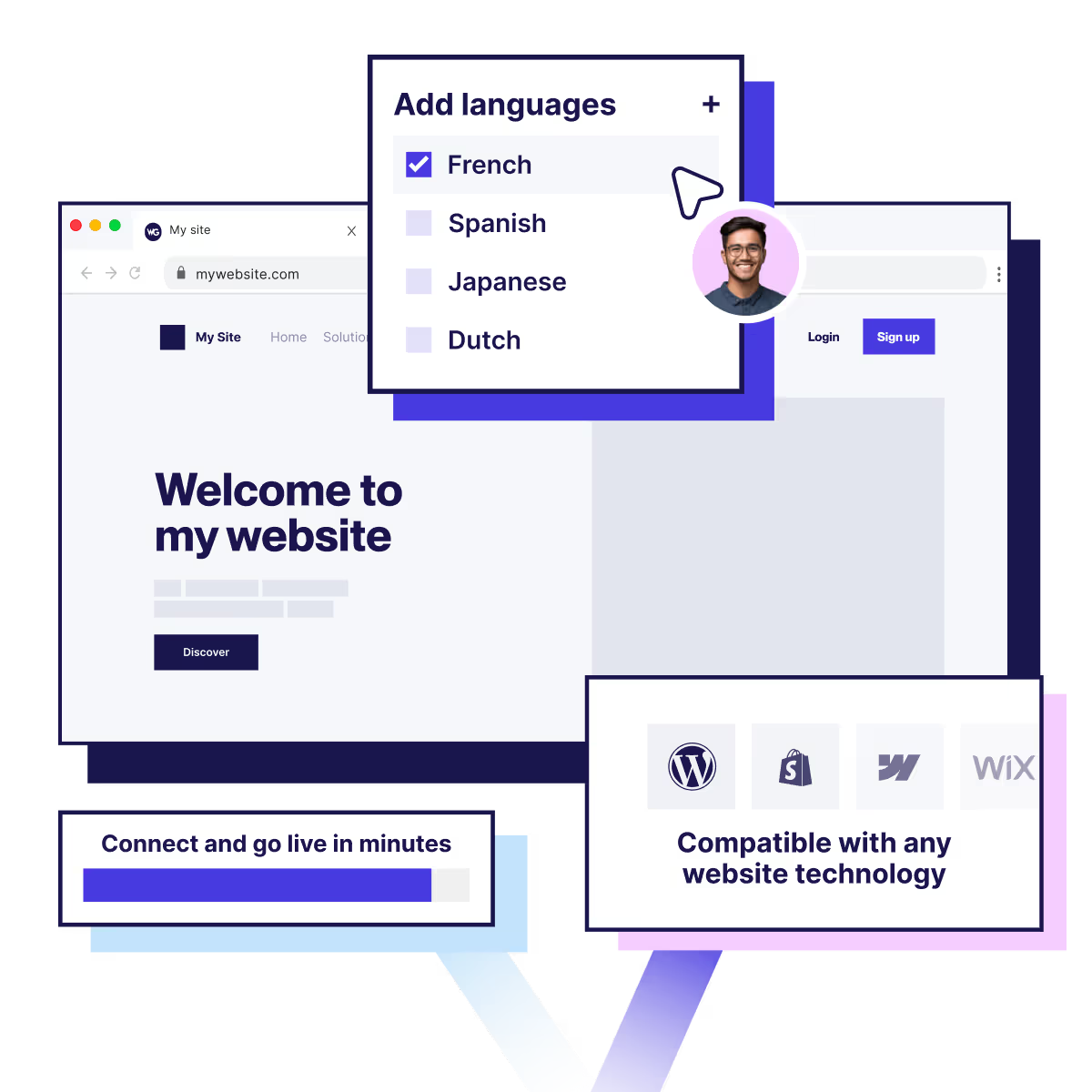
Weglot works across Shopify, WordPress, Webflow, Framer, custom sites and other website technologies, which suits a team running a store alongside campaign sites, documentation or a second CMS.
Linguise is proxy-based and works with all the major CMS on the market, whether self-hosted PHP like WordPress or cloud-hosted like Shopify or Squarespace. It also names Webflow, Wix, Joomla, PrestaShop, Magento, Adobe Commerce, BigCommerce, Drupal and Laravel among more than forty integrations.
How do Weglot and Linguise compare on published price?
Linguise's published prices are materially lower than Weglot's, and its plans do not limit the number of languages.
Rather than force a like-for-like table, here is what each one publishes on a monthly plan, checked 31 July 2026. Linguise lists three monthly plans in US dollars: START at $15 for 200,000 translated words, PRO at $25 for 600,000, and LARGE at $45 for translated words advertised as unlimited, subject to fair use. Languages are unlimited on all three.
Weglot publishes plans that are priced and charged in euros, with the dollar amounts on its pricing page shown as estimates. Its plans step up on two axes, word allowance and language count, from a free tier covering 2,000 words in one language through to €699 a month for 5,000,000 words across 20 languages, with Enterprise on request.
Those two lists are not directly comparable, and this page will not pretend they are. The currencies differ, Weglot's dollar figures are estimates, neither publishes how it counts a translated word, and Linguise's fair-use thresholds are not published. Two things are still safe to say: Linguise's published entry price is lower, and Linguise does not price by language count while Weglot's plans cap the number of languages each tier covers. Price both against your own word count and language set, and ask each one how it counts a translated word.
What does the price difference buy?
Three specific things, not a longer feature list: automatic multilingual SEO, a management workspace, and translation ordering.
Weglot creates hreflang tags, translates metadata and serves language-specific URLs without configuration, so translated pages can be indexed as pages in their own right. Linguise states that all its translations are SEO-optimized, but its published material does not itemise that specific set, so if technical multilingual SEO is what your project turns on, ask Linguise to confirm which of those it generates.
The second is the workspace. Weglot detects new content and translates it automatically, then gives your team a glossary for brand and product terms, a translations list, its own translator and teammate accounts, and the option to order professional translation from inside the tool. Linguise offers a front-end Live Editor, translator accounts and optional manual review, so review is covered, but the management layer around it is smaller.
On the trial, Linguise is the more generous of the two: one month with a 600,000 word quota and no card, against Weglot's fourteen days. If your evaluation needs a long runway, that is worth knowing before you choose.

Who should choose Linguise?
Linguise is the better choice when you need many languages at a low published price.
That is a real fit in several situations. If you need ten or twenty languages, Linguise does not charge more for them while Weglot's plans step up by language count. If budget is the binding constraint, its published entry prices are lower. If your site holds a very large amount of content, its plan advertised as unlimited words, subject to fair use, has no equivalent below Weglot's Enterprise tier. If you want a long evaluation, its one-month trial with a 600,000 word quota is more generous than fourteen days. And if you want a say in the translation engine, it offers Google Cloud AI translation or its own LLM-based option.
None of that makes it the wrong tool. It makes it a different purchase, priced for language breadth rather than for the workspace and the SEO handling built around the translation.
What should you do next?
Decide whether you are buying the lowest published price across many languages, or a workspace with multilingual SEO handled for you.
If you want to see it working on your own site before committing to anything, install Weglot on the free plan and look at your own content translated. If your decision turns on language count or budget, price both against your own word count and language set, and ask each one how it counts a translated word before you compare the numbers.

Translate your website with Weglot
Translations, glossary and multilingual SEO in one workspace your team runs. Free for the first 14 days.
